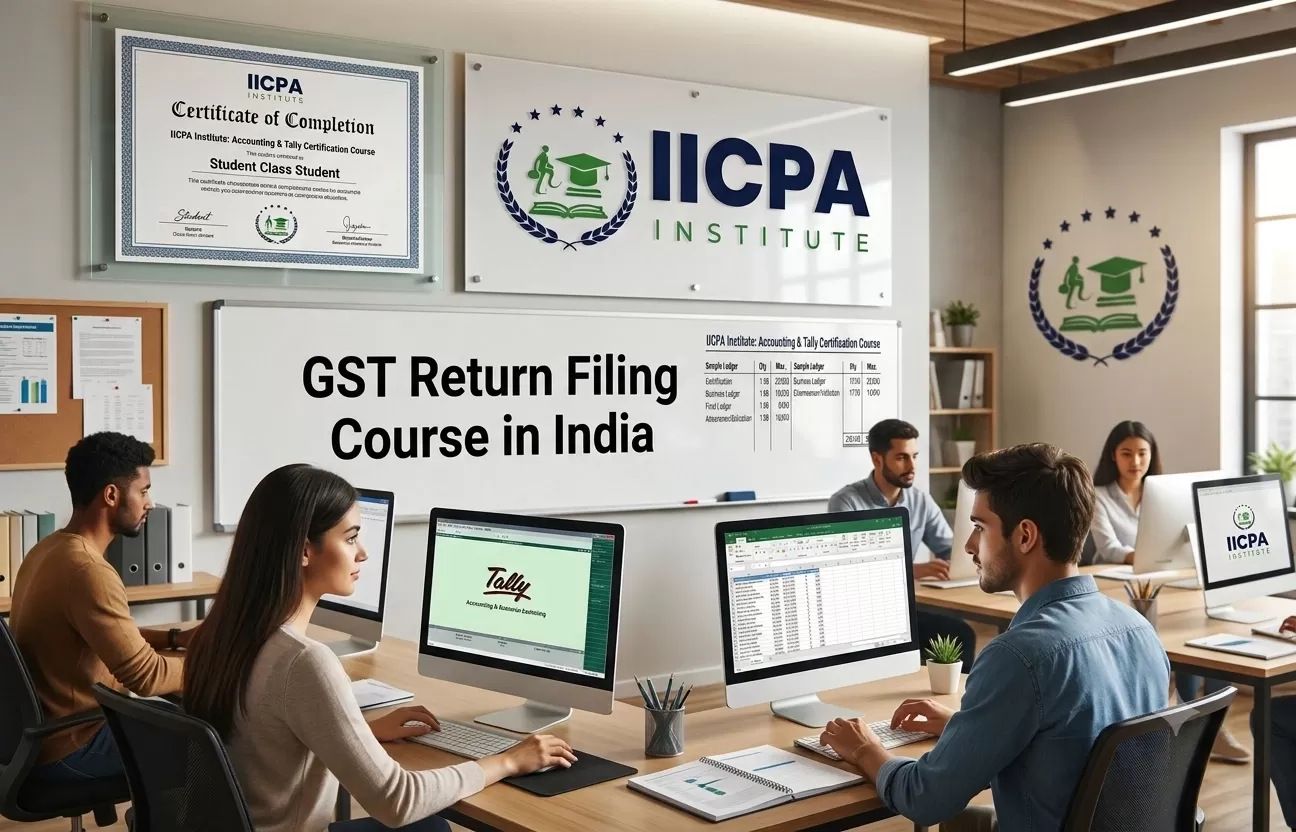
GST is an important part of business accounting in India. Every registered business must follow GST rules and file the required GST returns on time. Because of this, there is a growing need for people who understand GST return filing and can handle GST work correctly.
A GST Return Filing Course in India is a useful course for students, freshers, accountants, business owners, and working professionals. It helps learners understand GST returns and learn how to prepare and file them using practical examples.
What Is a GST Return Filing Course?
A GST Return Filing Course teaches the basic concepts and practical process of GST return filing. The course explains how GST works, what information is required for filing, and how businesses report their sales and purchases.
The main focus of the course is practical learning. Students can learn how to check invoices, understand GST data, calculate tax, and prepare return information.
A good course also explains common mistakes and how to avoid them while filing GST returns.
Why Is GST Return Filing Important?
GST return filing is an important compliance activity for registered taxpayers. Businesses need to report their GST-related transactions according to the applicable rules and filing requirements.
Incorrect information or missed deadlines can create problems for a business. Therefore, businesses need trained accounting staff who understand GST compliance.
Learning GST return filing can help students and professionals build a useful skill for accounting and taxation jobs.
What Do You Learn in a GST Return Filing Course?
A complete GST Return Filing Course in India generally covers both GST concepts and practical return filing.
1. GST Basics
The course starts with basic GST concepts. Students learn about CGST, SGST, IGST and UTGST and understand the basic structure of GST in India.
They also learn about taxable supplies, exempt supplies, invoices, input tax credit, and GST registration.
2. GST Registration
Students can learn the basic process of GST registration and understand the information and documents generally required.
They can also learn about GSTIN and the importance of maintaining correct taxpayer information.
3. GST Invoices
Invoices are an important part of GST compliance. The course explains important invoice details and helps learners understand how sales and purchase invoices are recorded.
Practical invoice examples make it easier for beginners to understand GST transactions.
4. Input Tax Credit
Input Tax Credit, commonly called ITC, is an important GST concept.
Students learn the basic rules related to ITC and understand how eligible purchase-related GST can be considered while calculating the tax liability, subject to applicable conditions.
5. GSTR-1
GSTR-1 is used by eligible taxpayers to report details of outward supplies.
In practical training, students can learn how sales information is prepared and uploaded for return filing.
They can also learn how to check invoice details before submission.
6. GSTR-3B
GSTR-3B is another important GST return used for reporting summary information and paying the applicable tax liability.
A practical course can teach students how to understand sales, purchases, ITC, and tax liability information before filing.
7. GST Payment
Students can learn the basic process of calculating GST liability and making GST payments through the GST system.
The course can also explain the use of electronic cash and credit ledgers in simple language.
8. GST Reconciliation
Reconciliation is an important accounting activity. Businesses need to compare their books with available GST data and identify differences.
Students can learn how to check invoices and identify common differences in GST records.
Who Should Join a GST Return Filing Course?
A GST Return Filing Course in India can be useful for many learners.
Students
Commerce and accounting students can learn practical GST skills along with their academic studies.
Freshers
Freshers who want to start a career in accounting can learn GST return filing to improve their practical knowledge.
Accountants
Existing accountants can improve their GST skills and learn a more structured approach to return filing.
Business Owners
Business owners can learn the basics of GST compliance and understand the information required for return filing.
Working Professionals
Professionals working in accounts, finance, or taxation can use GST training to improve their existing skills.
Benefits of Learning GST Return Filing
There are several benefits of learning GST return filing.
- Develop practical GST knowledge
- Understand GST return filing processes
- Improve accounting skills
- Learn invoice and GST data checking
- Understand basic ITC concepts
- Learn practical GST compliance
- Prepare for accounting and GST-related jobs
- Improve confidence in handling GST work
The actual career benefit depends on the learner's qualifications, experience, and other professional skills.
Career Opportunities After GST Training
After completing a GST return filing course, learners can explore different accounting and taxation-related roles.
Some possible job roles include:
- GST Executive
- Tax Assistant
- Accounts Executive
- Junior Accountant
- Accounts Assistant
- GST Return Filing Assistant
- Taxation Executive
- Finance Assistant
Students can also combine GST skills with Tally Prime, accounting, income tax, TDS, and Excel to develop a broader accounting skill set.
How to Choose the Best GST Return Filing Course in India
Before joining a course, check the syllabus carefully. The course should include both GST theory and practical training.
Look for training that covers GST registration, invoices, ITC, GSTR-1, GSTR-3B, GST payment, reconciliation, and practical examples.
Online classes can be a good option for students and working professionals because they provide flexibility. However, practical assignments and real-world examples are important for understanding GST work properly.
You should also check the trainer's experience, course duration, certification, practical sessions, and career support before selecting an institute.
Why Choose IICPA Institute?
IICPA Institute provides practical accounting and taxation training for students, freshers, and professionals.
The GST Return Filing Course in India is designed to help learners understand GST concepts and develop practical knowledge of GST return filing.
Learning GST with accounting and software skills can be especially useful for people planning to work in accounts, taxation, finance, or compliance.
Conclusion
GST is an important part of modern business accounting in India. Businesses need proper GST records and timely compliance. This creates a need for people who understand GST return filing and can manage GST-related work.
A GST Return Filing Course in India can help learners understand GST basics, invoices, ITC, GSTR-1, GSTR-3B, GST payments, reconciliation, and other important areas.
If you want to build a career in accounting or taxation, GST return filing is a valuable practical skill. Combining GST training with accounting, Tally Prime, Income Tax, TDS, and Excel can help you develop a wider range of job-oriented skills.
Start learning practical GST return filing and build a stronger foundation for your accounting and taxation career.